Reformer vs mat Pilates: which should you start with?
By Jess M. · 12 March 2027 · 8 min read
If you are new to Pilates, the first question is usually where to begin: on a reformer, or on a mat. Both teach the same principles of breath, alignment and control. They simply go about it in different ways. Here is how the two compare, and how to choose the one that suits you right now.
In this article
What reformer and mat Pilates are
Mat Pilates is the original form of the method. You work on a padded mat using your own body weight, sometimes with small props such as a soft ball, a light band or a ring. Every exercise asks you to support and move yourself, so the work is honest: there is nothing to lean on and nothing to hide behind.
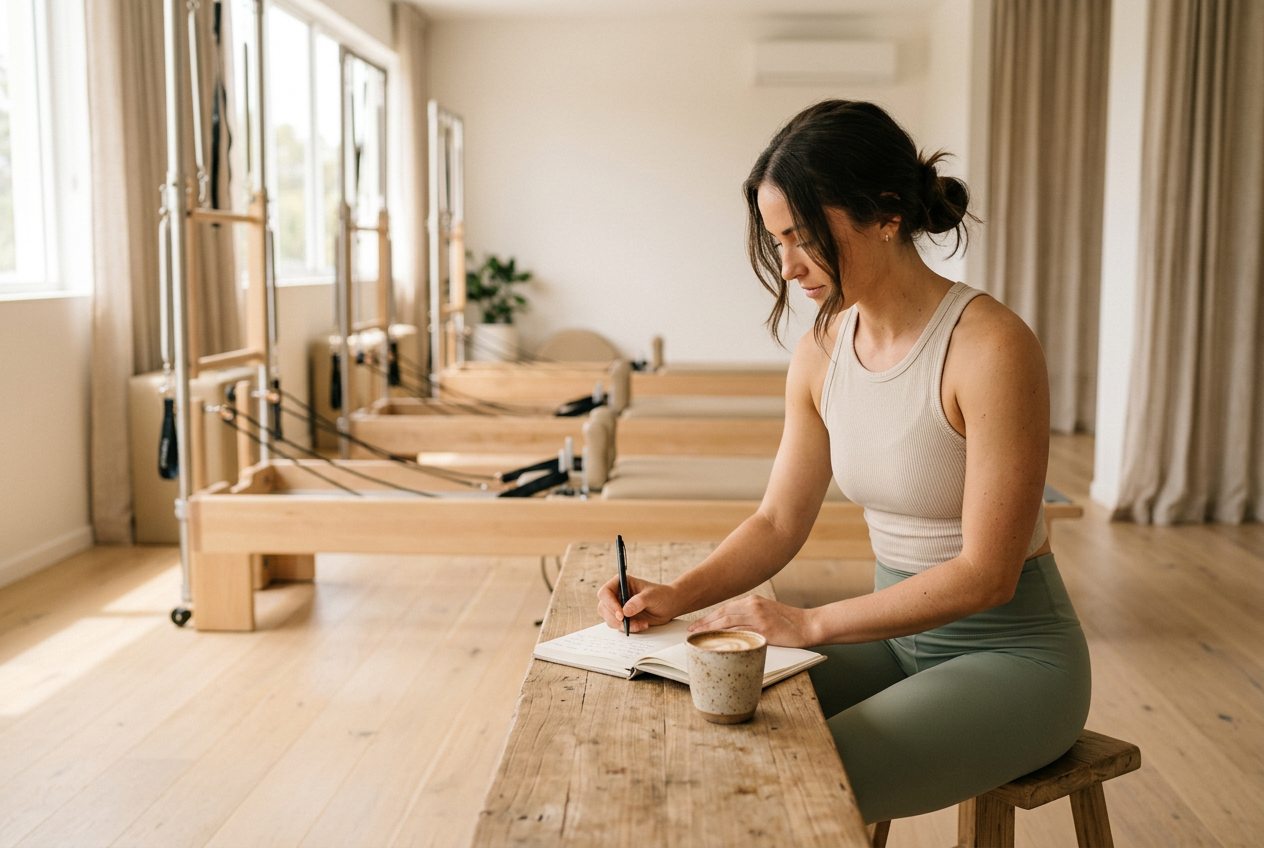
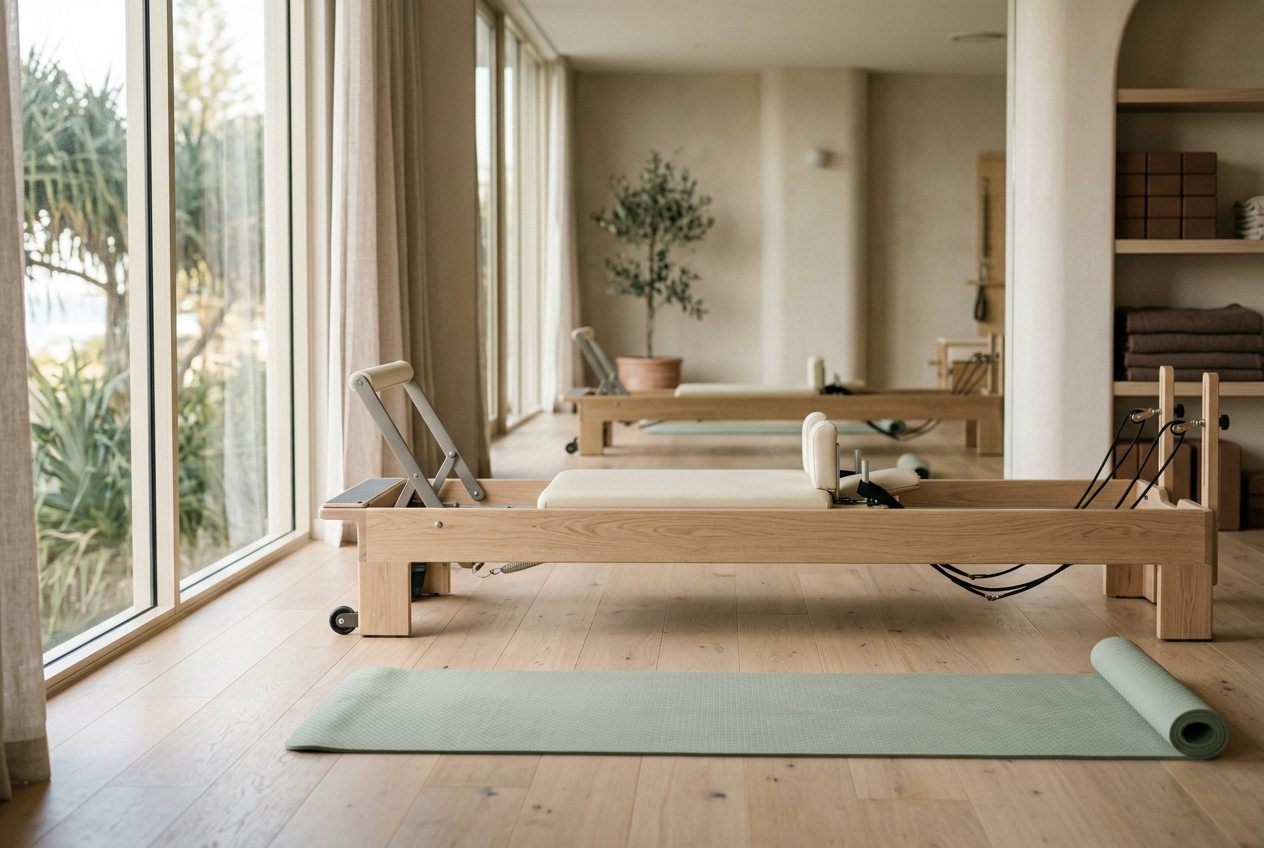
Reformer Pilates uses a sliding carriage on a frame, with springs underneath, straps for your hands or feet, a footbar and a headrest. The springs can make an exercise harder by adding load, or easier by helping you through a range you cannot yet control on your own. At Aero we teach on ten Merrithew reformers, and every class is capped at ten people so your instructor can see everyone in the room.
The two share the same roots. Many mat exercises have a reformer version, and most of the cues you hear in class, such as finding a neutral pelvis, breathing into the back of the ribs or lengthening through the crown of the head, are exactly the same on both.
How they feel different
The biggest difference is feedback. On the reformer, the carriage moves when you move and the springs push back. That resistance tells you straight away when you have lost control of a movement, which many beginners find reassuring. The straps and footbar also give you something to press into, so it is often easier to feel which muscles are doing the work.
On the mat, you are the equipment. Lifting your own legs and head against gravity is surprisingly demanding, and some classic exercises, such as the roll up, take patience to build towards. The upside is that mat work travels with you. Once you know the basics, you can practise at home, in a hotel room or at the park with nothing more than a mat.
The pace differs too. Reformer classes include short transitions while you change springs or move from lying to kneeling to standing. Mat classes tend to flow from one exercise to the next with fewer pauses, which some people love and others find a little fast at first.
Neither one is the advanced version of the other. They are two ways into the same practice.
Reformer vs mat at a glance
If you like to see things side by side, this is how the two formats compare in our studio.
Compare
Reformer
Mat
Equipment
Sliding carriage, springs, straps and footbar
Padded mat and small props
Resistance
Adjustable springs add or reduce load
Your own body weight
Help for beginners
Springs can assist you through a movement
Fewer ways to make a move easier
Pace
Short pauses to change springs
Flows with fewer pauses
At home
Needs a studio and a machine
Easy to continue with a mat
At Aero
Up to ten people, from Foundations to Burn
Up to ten people, all levels
Who tends to start where
There is no single right answer, but after years of welcoming new members we see a few useful patterns.
The reformer often suits people who like clear feedback, people coming back to exercise after a long break, and anyone who finds lying on the floor and lifting their own body weight hard to begin with. Because the springs can assist as well as resist, your instructor has more ways to adjust an exercise to you.
The mat often suits people who want a practice they can continue at home between classes, people who already have a base of strength and enjoy a flowing class, and anyone curious about where the method began.
Age and fitness matter less than you might think. We teach complete beginners in their twenties and members who started in their seventies, and both formats can be adjusted for either.
If you are managing pain, an injury or a health condition, check with your GP or physiotherapist before you start, whichever format you choose. Our Clinical Pilates sessions are run by a physiotherapist and are a better starting point if you would like a program built around you.
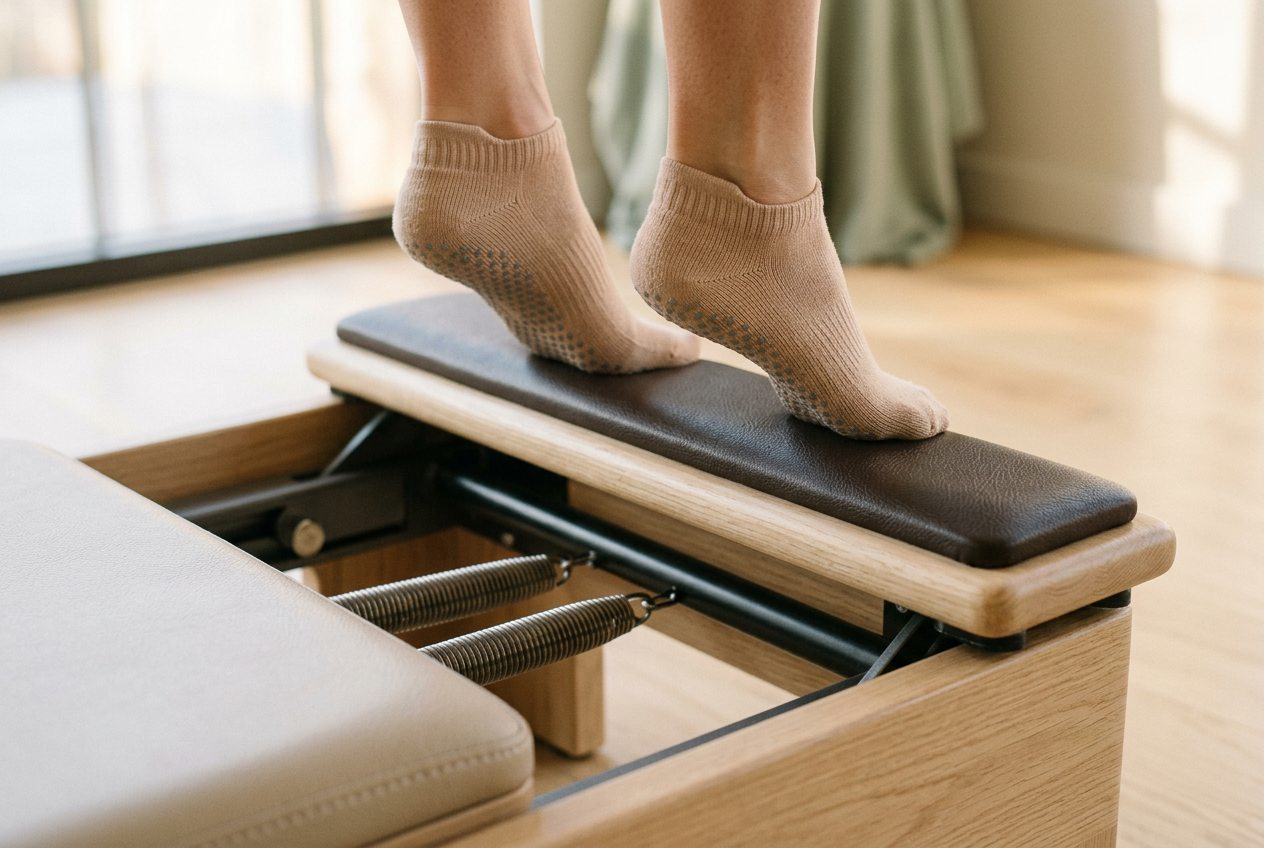
Reformer and mat build the same foundations: breath, alignment and control.
What your first class looks like
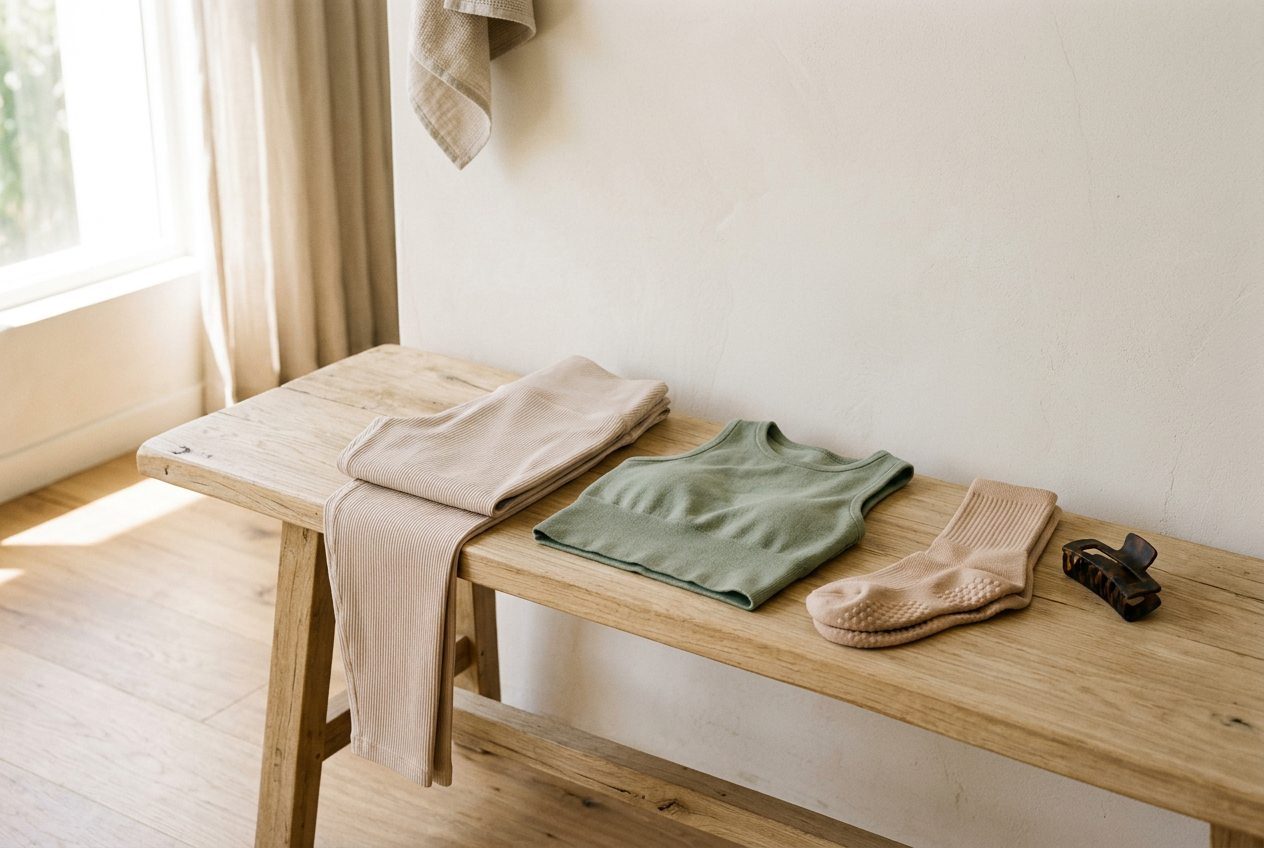
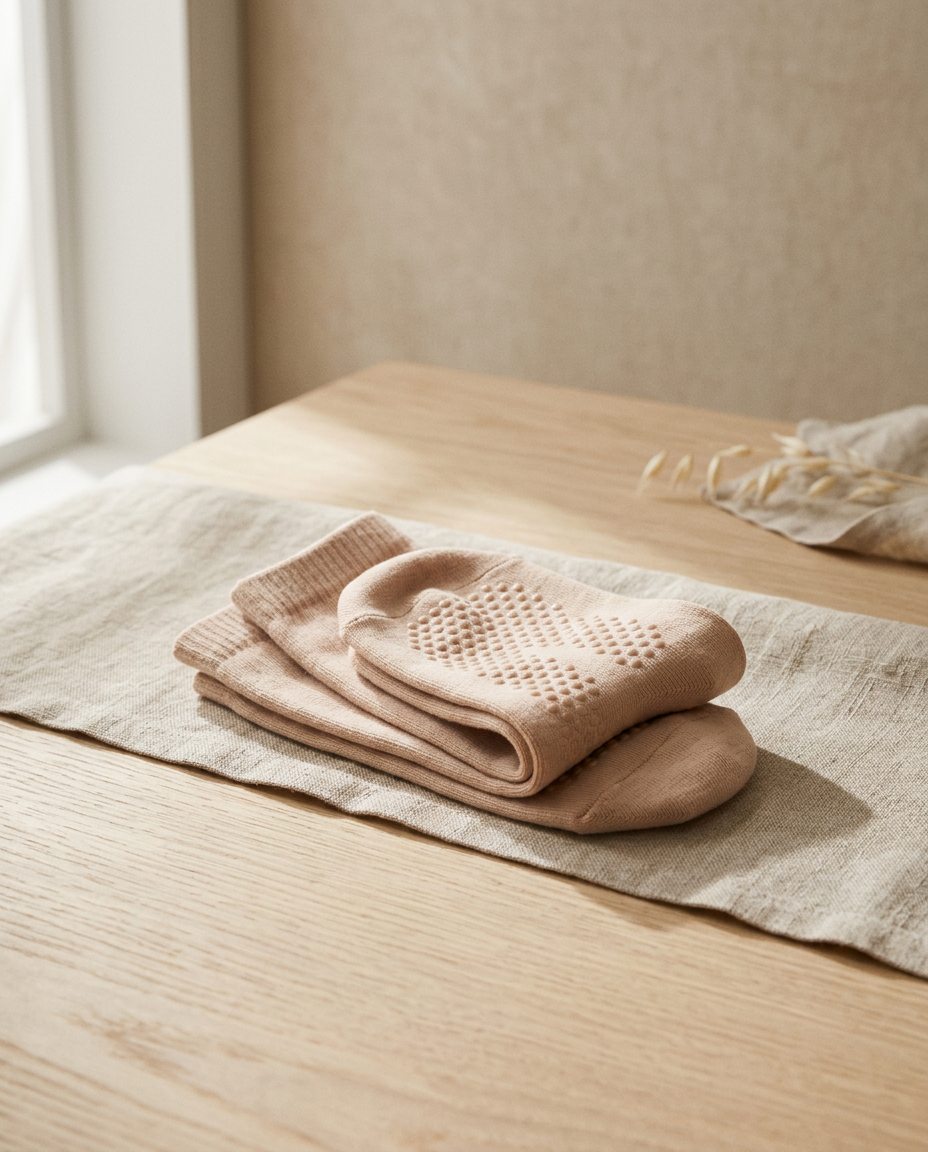
Whichever class you book, your first visit starts the same way. Arrive ten minutes early so we can show you around, take a few details and answer any questions. Grip socks are required in every class, and you can buy a pair at the front desk if you do not have your own.
In a reformer class, your instructor will help you set the springs, the footbar and the headrest before you begin, and will check in with you as the class moves along. Expect to spend a lot of the class lying down at first, with kneeling and standing work added as you settle in. In a mat class, you will start with breath and simple movements before moving on to longer sequences.
It is normal to feel a little unsure for the first two or three classes. The names of exercises, the set-up and the breathing pattern all become familiar quickly, and nobody expects you to know them on day one.
How to choose your first class
Start with the format that makes you most likely to come back. Turning up regularly matters far more than which piece of equipment you begin on.
If you choose the reformer, book Reformer Foundations. It is our beginner class: a slower pace, plenty of help with springs and set-up, and a steady focus on alignment, breath and control. Most people take Foundations for a few weeks before moving on to Reformer Flow.
As a rough guide, two classes a week is a comfortable rhythm for most beginners, with a rest day in between. Our guide to how often you should do reformer Pilates goes into more detail.
If you choose the mat, Mat Pilates is open to all levels, and your instructor will offer options for each exercise so you can work at the right level on the day. Many of our members end up doing both: reformer for load and feedback, mat for control and a practice they can take anywhere.
Still not sure? Our Intro week gives you three group classes in seven days for $59, which is enough to try both formats and feel the difference for yourself.
Key takeaways
Reformer and mat share the same principles; neither is more advanced.
Reformer springs add feedback and can make moves easier or harder.
Mat work uses your own body weight and is easy to practise at home.
New to the reformer? Start with Reformer Foundations.
Managing pain or an injury? Speak with your GP or physio first.
Related class
Put it into
practice.
If this article has you leaning towards the reformer, Reformer Foundations is the place to begin. Classes are capped at ten, the pace is unhurried and your instructor sets up the machine with you. New to Aero? The Intro week is three classes in seven days for $59.
Ten people at most, one instructor
50 minutes · Beginner · Low intensity
Grip socks required, available at the desk
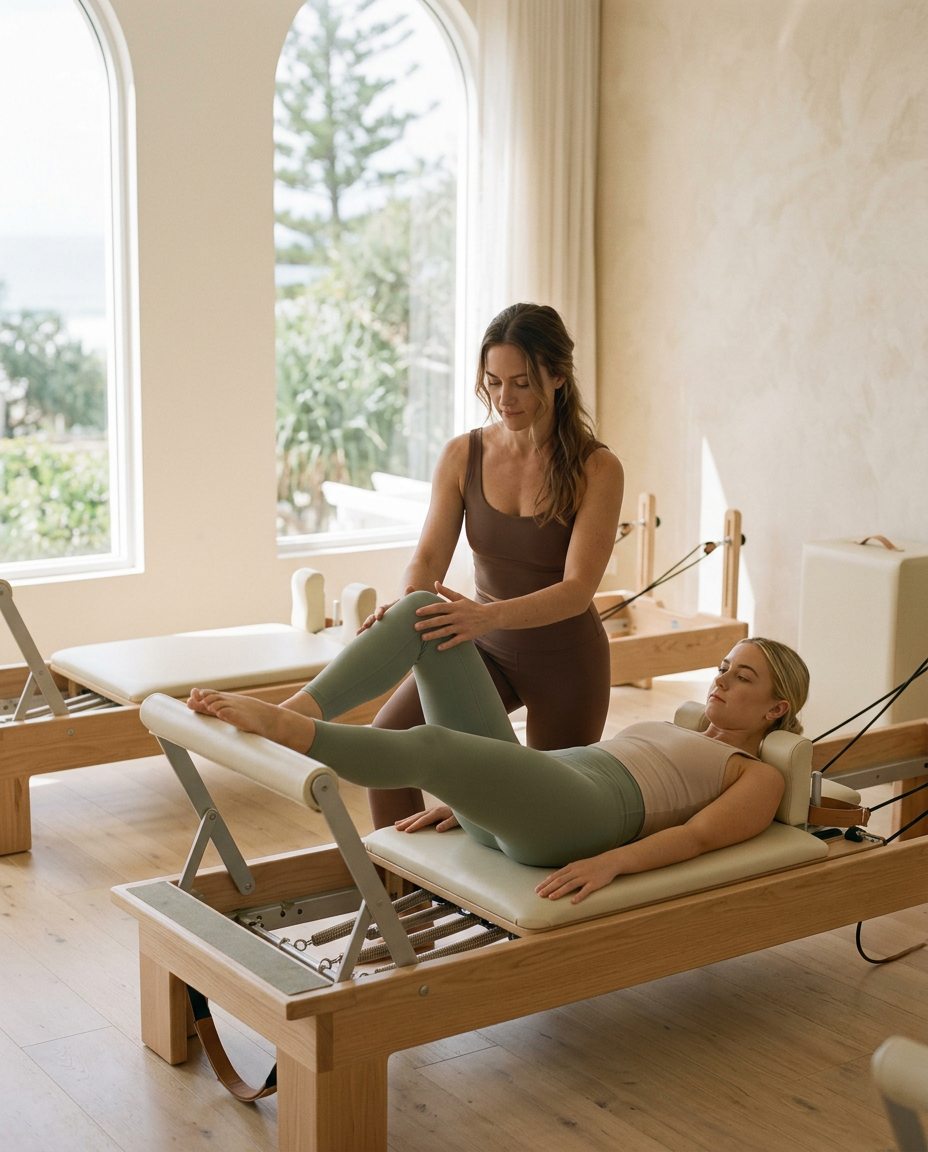
Reformer Foundations
Our beginner reformer class. Alignment, breath and control at a calm pace, ideal for first-timers and anyone returning after a break.
View class
Journal
Keep
reading.
More from Reformer basics: practical guides for your first months on the reformer, written by our instructors.
All articles